
AI SEO Tools
Introduction
AI SEO tools replace the old guesswork of ranking content — which terms to use and how often — with data drawn from the pages already ranking, turned into a brief or a live score you write against. Increasingly they also tackle a newer problem: getting content cited by AI answer engines like ChatGPT, Perplexity, and Google's AI Overviews, not just indexed by search. This page is for writers, marketers, and small teams optimizing content that needs to be found — by Google, by AI, or both.
Top recommendations
Surfer SEO
PaidA content-editor-centered SEO tool that scores a page in real time against top-ranking competitors while you write, then layers on AI drafting and AI-search scoring.
Clearscope
PaidA content-grading tool that scores drafts from F to A++ based on topic coverage compared to top-ranking competitors, built for a simple, low-setup optimization workflow inside Google Docs or WordPress.
Comparison
| Tool | Best for | Pricing |
|---|---|---|
| Surfer SEO | Content writers and SEO specialists who want live, in-editor guidance (word count, terms, headings) while drafting or refreshing an article | $49/month (Discovery plan, billed annually) |
| Clearscope | Content teams that want a clean, easy-to-explain grading system non-SEO writers can use without extensive training | $129/month (Essentials plan) |
| MarketMuse | Content strategists planning topic clusters and pillar-page structures across a whole site rather than optimizing individual articles | Custom (no published price for paid tiers as of 2026) |
| Frase | Startups and solo content creators on a tighter budget who need solid content briefs and AI writing help without an enterprise price tag | $39/month (Starter plan, billed annually) |
| Semrush | Teams that already need (or plan to need) full-scope SEO tools — keyword research, backlink analysis, technical site audits — and want AI-answer-engine visibility bundled into the same platform | $139.95/month (Pro plan); AI Visibility Toolkit/Semrush One from $199/month |
| Otterly.AI | Marketing teams and SEO specialists who need to know whether AI answer engines mention their brand at all, separate from any content-writing workflow | $29/month (Lite plan, billed monthly; ~$25/month billed annually) |
Reviews
Surfer SEO
A content-editor-centered SEO tool that scores a page in real time against top-ranking competitors while you write, then layers on AI drafting and AI-search scoring.
Read the full review — Surfer SEO →Clearscope
A content-grading tool that scores drafts from F to A++ based on topic coverage compared to top-ranking competitors, built for a simple, low-setup optimization workflow inside Google Docs or WordPress.
Read the full review — Clearscope →MarketMuse
An AI content-planning platform that builds topic models across an entire site, surfacing content gaps and generating detailed briefs, rather than scoring one page at a time.
Read the full review — MarketMuse →Frase
A budget-friendly platform that combines SEO content briefs, AI drafting, and generative-engine optimization (GEO) scoring for AI-answer-engine citations in one workspace.
Read the full review — Frase →Semrush
A broad SEO and marketing platform whose AI Visibility Toolkit tracks brand mentions across Google AI Overviews, ChatGPT, Perplexity, Copilot, and Gemini, alongside its long-standing keyword research and content tools.
Read the full review — Semrush →Otterly.AI
A dedicated, affordable tool for tracking how often and how favorably a brand is mentioned or cited across AI answer engines like ChatGPT, Google AI Overviews, Perplexity, and Copilot.
Read the full review — Otterly.AI →Frequently asked questions
Do I still need these tools now that AI Overviews and chatbots answer questions directly?
Yes, though the job has expanded rather than disappeared. Traditional keyword-and-ranking optimization still matters for the share of searches that show a classic results page, and several of these tools (Frase, Semrush, Otterly.AI) now also track and optimize for whether AI answer engines cite your content at all — a discipline often called generative engine optimization (GEO) or answer engine optimization (AEO).
What's the difference between a content-optimization tool and an AI-visibility tracker?
Content-optimization tools like Surfer SEO, Clearscope, and MarketMuse analyze a specific page you're writing and tell you what terms, subtopics, and structure it needs to compete with top-ranking pages. AI-visibility trackers like Otterly.AI instead monitor whether and how often AI engines such as ChatGPT or Google AI Overviews mention or cite your brand for relevant prompts — a different, more recent measurement problem.
Can these tools write my content for me?
Most include some AI drafting or writing-assistance feature, but none are meant to replace a subject-matter expert reviewing and editing the output. Content produced purely by these tools' generation features tends to read as generic, and search engines and AI answer engines both increasingly reward genuinely useful, well-reviewed content over templated output.
Do I need a separate SEO platform like Ahrefs or Semrush's core toolkit in addition to these?
It depends on scope. The tools on this page focus on content optimization and AI-search visibility, not full technical SEO auditing, backlink analysis, or rank tracking at scale. Semrush covers both, bundling AI-visibility tracking with its broader SEO toolkit, which is why it appears here — but a team doing heavy technical SEO or link-building work may still want a dedicated platform alongside a content-focused tool like Surfer or Clearscope.
How reliable is AI-search-visibility tracking, given that AI answers change constantly?
Treat the numbers as directional rather than exact. AI answer engines regenerate responses dynamically and can give different answers to the same prompt from one day to the next, so visibility trackers report a sampled, approximate share rather than a guaranteed ranking. Vendors in this space describe citation decay after roughly 13 weeks without content updates, which is one reason these tools emphasize refreshing content regularly rather than optimizing once and moving on.
How to choose the right AI SEO tool
These tools look similar on the surface but split into a few genuinely different jobs. Figure out which you need before comparing prices:
- Page-level optimization while writing. Tools that score a single page against top-ranking competitors and tell you what to cover. This is the core job most people mean by “SEO tool.”
- Site-level topic planning. Tools that map topic clusters and content gaps across a whole site, for teams planning many pages rather than perfecting one.
- AI-search visibility. A newer job: tracking whether AI answer engines actually mention or cite your brand, independent of any writing workflow.
- All-in-one vs. focused. Broad SEO platforms bundle content features alongside keyword, backlink, and rank-tracking data. If you already have that, a focused content tool may be all you’re missing.
- Price by your real volume. Most tools meter by content briefs, tracked topics, or monitored prompts per month. Estimate your actual monthly output before comparing sticker prices — the cheapest plan is often the wrong size.
How AI SEO tools differ from doing SEO by hand
The manual version of this work meant reading competing pages yourself, guessing at the terms that mattered, and hoping you’d covered enough. AI SEO tools do the tedious part at scale: they read the top-ranking pages for you, extract the topics and subtopics they share, and hand back a brief or a score instead of a hunch. That doesn’t make the writing itself automatic — tools that generate copy tend to produce generic text, and both search engines and AI engines increasingly reward genuinely useful, reviewed content over templated output. What AI removes here is the analysis and the guesswork, not the judgment.
SEO for Google versus getting cited by AI answer engines
Ranking on a results page and being the source an AI answer quotes are related but no longer the same job, and this is the fastest-moving part of the category. Classic optimization still matters for the searches that show a normal results page. But as AI Overviews and chatbots answer more questions directly, being cited by them — a discipline often called generative engine optimization (GEO) or answer engine optimization (AEO) — becomes its own target, with its own tools for tracking whether you’re mentioned at all. Treat those visibility numbers as directional rather than exact: AI answers regenerate constantly and can differ from one day to the next, which is also why this side of SEO rewards keeping content fresh over optimizing once and walking away.
Related articles
What Is GEO (Generative Engine Optimization)? Complete 2026 Guide
Learn what Generative Engine Optimization is, how GEO differs from SEO and AEO, and how to improve visibility in ChatGPT, AI Overviews, Copilot, and Perplexity.
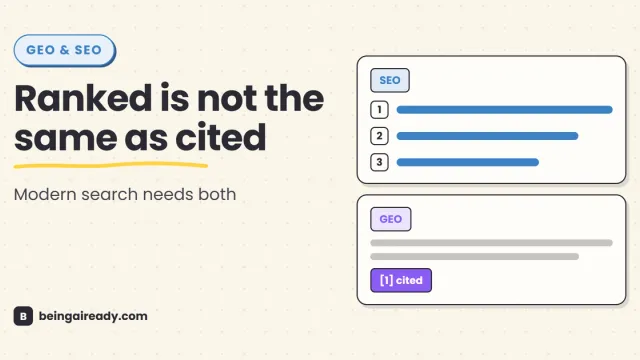
GEO vs SEO: What's Different and Why You Now Need Both
SEO earns rankings and clicks. GEO helps content get selected and cited in AI answers. Learn what differs, what overlaps, and why you need both.
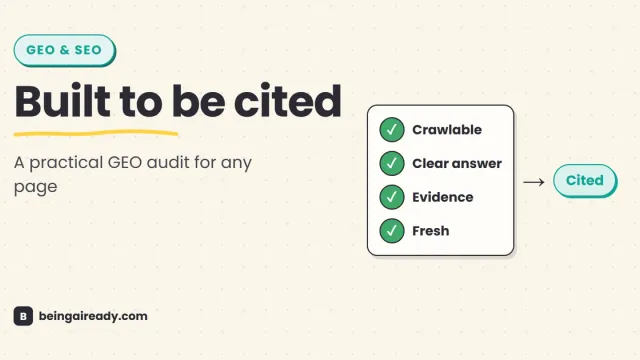
The GEO Checklist: Make Any Page AI-Citable
A practical, evidence-based GEO checklist for making any page easier for AI search systems to discover, understand, verify, quote, and cite.
How to Show Up in Google AI Overviews
A practical 2026 guide to earning citations in Google AI Overviews through stronger SEO, original evidence, clear structure, and measurable improvements.
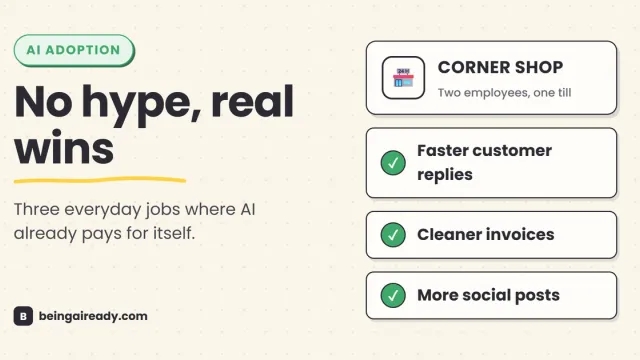
AI for Small Business: A Practical Starter Guide
A grounded, no-hype guide to using AI in a small business: where it actually helps, which tasks to start with, what it really costs, and how to stay safe.
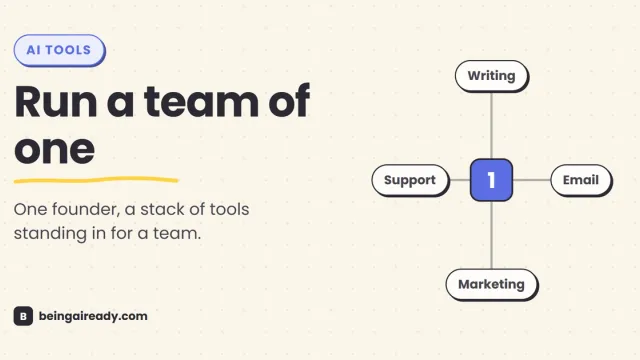
The Complete AI Tool Stack for Solopreneurs
A practical, job-by-job AI tool stack for solopreneurs: what to use for writing, email, marketing, admin, and support, what it actually costs, and what to skip.