
Relevance AI
A no-code platform for building and coordinating teams of AI agents — an 'AI Workforce' — that handle business tasks like outreach, research, and support across thousands of integrations.
Visit website (opens in a new tab)Independent editorial listing. Features, pricing, and privacy terms can change; confirm details on the vendor site before buying or rolling out a tool.
What it does
Relevance AI describes itself as “the home of the AI Workforce” — a no-code platform for building AI agents and coordinating several of them together on a single business process, rather than a single general-purpose assistant. Teams assemble agents visually, connect them to existing tools through a large integration library, and chain specialized agents (research, calling, follow-up) into one coordinated workflow, with A/B testing and evaluation tools to check whether a given agent configuration is actually working before relying on it at scale.
Its pricing model is more complex than a flat subscription: platform usage (“Actions”) and AI compute cost (“Vendor Credits”) are metered separately, which means the advertised entry price doesn’t tell you much about real cost at volume. Anyone evaluating Relevance AI for a business-critical workflow should model expected monthly Actions and Vendor Credit usage against the published rates before committing budget.
Ideal users
- Business and operations teams that want to build custom AI agents without writing code
- Companies automating multi-step processes like lead research, outreach, or support with agents that use judgment rather than a fixed script
- Teams that need to combine several specialized agents — for example research, calling, and follow-up — into one coordinated workflow
- Organizations that plan to connect agents to many existing tools through a large integration library
Who should avoid it
- You're an individual wanting a low-cost, ready-to-go general agent — better served by Manus
- You want a code-first framework you control directly rather than a hosted no-code builder — better served by CrewAI
- You need agents deeply embedded in a specific CRM you already run — better served by Salesforce Agentforce
- Predictable flat pricing matters to you — Relevance AI's dual-meter model (Actions plus Vendor Credits) can spike sharply with volume
Key features
- No-code agent builder with a large library of pre-built integrations
- Multi-agent 'workforce' orchestration for chaining specialized agents together on one task
- Calling and meeting agents for voice-based workflows
- A/B testing and agent evaluation tools
- Analytics and usage dashboards
- Enterprise security features: SSO, role-based access control, and audit logging
Pros / Cons
Pros
- No-code builder lowers the barrier for non-developers assembling multi-agent workflows
- Large integration library reduces custom engineering work to connect agents to existing tools
- Supports orchestrating multiple specialized agents together, not just a single general assistant
- Enterprise-grade access controls and audit logging are available
Cons
- Dual-meter pricing — separate platform Actions and AI-compute Vendor Credits — makes total cost harder to estimate than a flat subscription
- Overage rates can make bills spike quickly during high-volume workflows
- Published self-serve pricing is limited; several tiers require talking to sales
- Less suited to individuals wanting a simple, ready-made general agent
Pricing
Free — $19/month (Pro plan, billed annually)
Relevance AI's own documentation confirms four tiers: Free ($0/month, 200 Actions/month plus a one-time Vendor Credit bonus), Pro ($19/month billed annually or $29/month month-to-month, 2,500 Actions/month plus $20/month in Vendor Credits), Team ($234/month billed annually or $349/month month-to-month, 7,000 Actions/month plus $70/month in Vendor Credits), and custom-priced Enterprise. Paid-plan top-ups cost $80 per 1,000 Actions and $20 per 10,000 Vendor Credits.
Typical workflows
- A sales team builds an agent workforce that researches leads, drafts personalized outreach, and hands off qualified conversations to a human rep, coordinated across several chained agents.
- An operations team connects Relevance AI to its existing tools — CRM, calendar, support inbox — and configures agents to triage and route incoming requests without writing custom integration code.
Integrations
- 2,000+ third-party app integrations, including Slack and Salesforce, per Relevance AI's own integrations page
- Custom API and Vendor-Credit connections to OpenAI and Anthropic models
Privacy & security notes
Relevance AI states it does not use customer data to train its models; agent and tool run logs are kept for 30 days on the free tier and retained until deleted on paid tiers, subprocessors are listed publicly, and customers choose a data region (US, EU, or Australia) at signup.
Frequently asked questions
Is Relevance AI a good fit for someone who just wants a personal AI agent?
Not really — it's built for teams automating business processes with multiple coordinated agents, not as a lightweight personal assistant. Manus is a better fit for individual, general-purpose use.
Do I need to code to use Relevance AI?
No — it's a no-code builder, unlike CrewAI, which is a code-first framework for developers.
How does pricing actually work?
Relevance AI separates platform usage ('Actions') from AI compute cost ('Vendor Credits'), so your bill depends on both how much you use the platform and how much underlying model inference your agents consume.
Can Relevance AI replace a CRM-embedded agent tool like Agentforce?
Not directly — it's a general workflow and agent builder that can connect to a CRM, rather than an agent layer built natively inside one the way Agentforce is built inside Salesforce.
Best alternatives
Manus
FreeA general-purpose autonomous AI agent that plans multi-step tasks from a single prompt, browsing the web, writing code, and delivering finished documents, slides, or small web apps.
CrewAI
FreeAn open-source Python framework, plus a managed cloud platform, for building and orchestrating multi-agent AI systems where developers assign agents roles, tools, and tasks.
Related tutorials
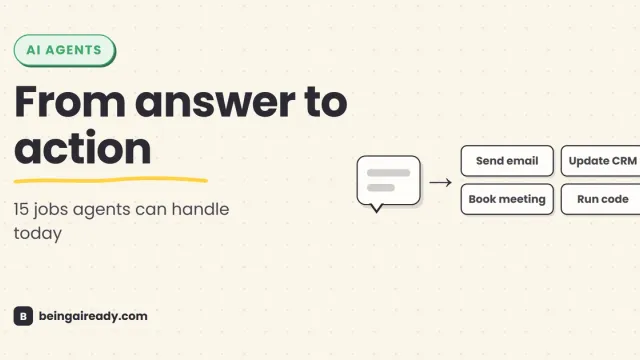
What Can AI Agents Actually Do? 15 Real Examples by Use Case
See what AI agents can do today through 15 real examples across support, sales, research, finance, legal, HR, coding, IT, and security.
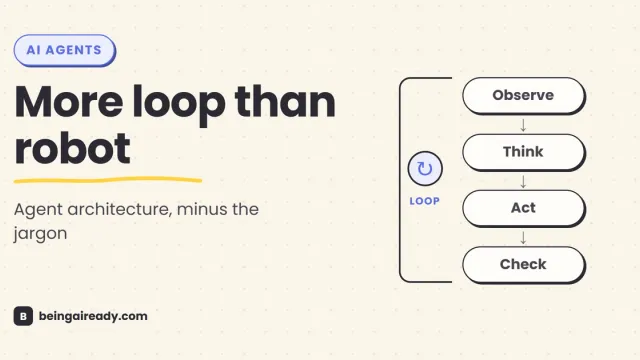
How Do AI Agents Actually Work? Architecture in Plain English
A plain-English guide to AI agent architecture: models, tools, memory, orchestration loops, guardrails, and what happens when an agent takes action.
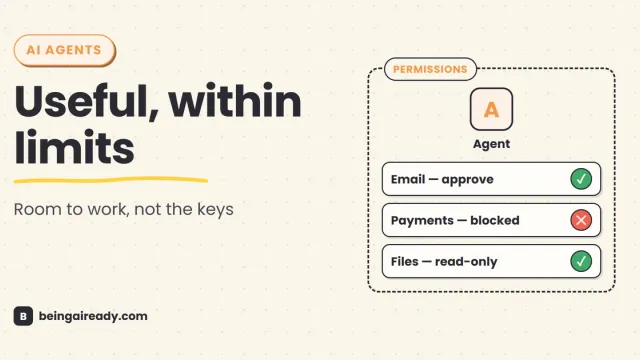
Are AI Agents Safe? Risks, Limits & How to Use Them Responsibly
AI agents can act, not just answer. A practical guide to their real risks, current limits, and the controls that make them safer to use.
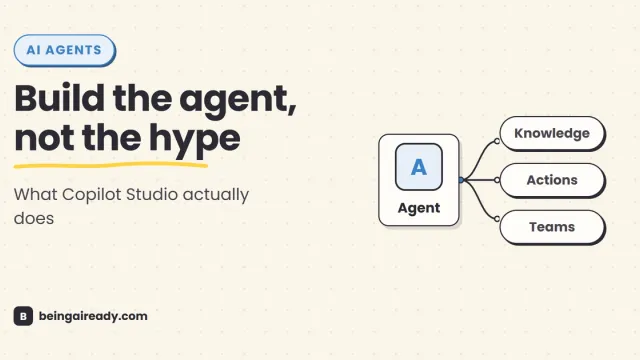
Microsoft Copilot Studio Explained: What It Is & How to Use It
A practical guide to Microsoft Copilot Studio: what it does, how agents work, a step-by-step build, pricing, security, and when to use something simpler.
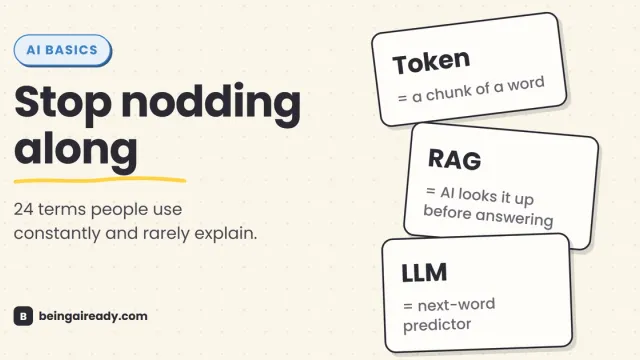
AI Terms Explained: A Plain-English Glossary of 24 Words
The 24 AI terms everyone uses but nobody defines — LLM, tokens, RAG, agents and more — explained in plain English, with analogies that actually stick.